

Is Your Body Resisting Weight Loss? Your Nervous System Might Be Protecting You
3 ways to help your body feel safe enough to support digestion, energy, and weight loss by regulating your nervous system.
I used to think getting healthy was about forcing and controlling my body to behave.
The “good” foods, lots of supplements, the disciplined workouts… thinking, “My body should respond to me, right?”
And if I'm being honest, I spent years trying to out-discipline my symptoms.
The stricter I got with nutrition, the harder I pushed my workouts, and the more health advice I followed, the more my body seemed to push back with bloating, energy crashes, hormone issues, and stubborn weight that refused to budge.
I've had clients come to me from both ends of the spectrum. Some felt like they tried everything and were exhausted from chasing the next best thing. Others were overwhelmed by all the things they “should do” but feared taking the first step.
Both groups had one thing in common: They felt stuck.
And when we feel stuck, our first instinct is often to do more and push harder.
What I eventually learned (and my clients do too) after spending more than a decade navigating my own issues was that I had been looking for solutions in the wrong place.
We tend to want to control our bodies from the outside, rather than addressing the root of what is stirring up on the inside.
The missing piece is your nervous system.
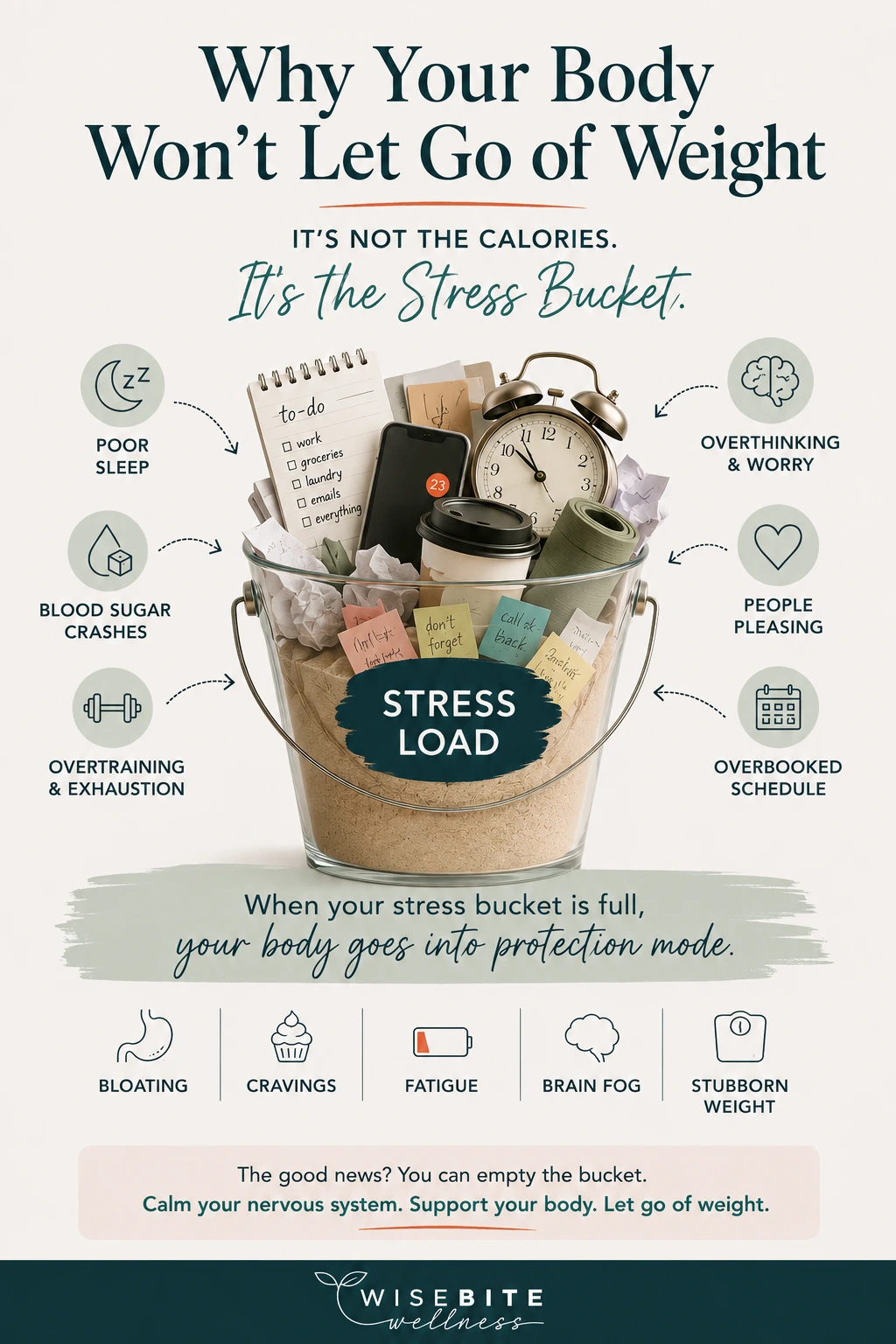
What I discovered is that the symptoms we try to fight are often warning signs from the body that it's under more stress than it can comfortably handle.
I'm talking about physical stress from blood sugar crashes and poor sleep. The emotional stress we carry from day to day. The pressure, perfectionism, and "go-go-go" pace so many women have normalized.
So yeah, that stubborn weight? From your body's perspective, it's often a protective response.
It's your body literally storing extra energy and padding for your organs because it perceives danger.
That doesn't mean stress is bad or that we need to eliminate it from our lives. That's impossible. It's about helping your body feel supported enough to handle it.
Nervous system regulation is one of the first places I start with clients, and exactly where I'd recommend regardless if you’re taking your first step or 100th step. And I’m going to share the 3 steps that take you from stressed to calm so your body can lose weight.
Why Your Body Feels Stuck
Once I understood that the nervous system was the missing piece, something else started to make sense. My body was adapting and responding to me.
The body is constantly scanning its environment and asking one question: "Am I safe?"
When the answer is yes, your body has the resources to focus on digestion, hormone balance, recovery, metabolism, and all the things we associate with feeling healthy.
But when your nervous system is stuck in a stress state because it perceives ongoing stress, like poor sleep or emotional overwhelm — even if it’s subtle to you — your body shifts into survival mode. In that state, it only prioritizes primary functions, like heart rate, over optimizing things like digestion, energy, or fat loss.
And this is where weight starts to make a lot more sense because from your body's perspective, holding onto extra energy is often a smart survival strategy.
The same goes for symptoms like bloating, fatigue, cravings, brain fog, and hormone imbalances. They are signs that your body is adapting to support you (while trying to raise its hand to get your attention, “Hellooooo!”).
The challenge is that most of us respond to stressors with patterns and habits we're not even aware of, which can keep the cycle going.
So your digestion slows down, energy feels sporadic, and weight won’t budge — and it all feels incredibly confusing.
What it actually means to reset your nervous system
This is where a lot of people get nervous system regulation wrong.
They think it means eliminating stress, meditating more, buying the latest nervous system gadget, or somehow forcing themselves to feel calm all the time.
But nervous system regulation isn't about avoiding stress. In fact, stress is part of being human! The real goal is to help your body become more resilient to it.
When your body feels supported, it can move out of survival mode and into a state where it can better support digestion, energy, hormone balance, metabolism, and recovery.
Stressful things still happen, but they don't run the show anymore.
And this is exactly the approach I take with clients.
We don't start with more rules, more restrictions, or another meal plan full of stressful "shoulds."
Instead, we start by helping the body feel safe enough to do what it already knows how to do.
That's where these three steps below come in.
The 3 Secrets to Signal “Relax!” So Your Body Can Lose Weight
Step 1: Reduce the physical stress your body is under
This is where I almost always start because most women are dealing with more physical stress than they realize, and it's one of the fastest ways to support the nervous system.
Physical stress can show up in ways that seem normal: skipping meals because you're busy, riding the highs and lows of the blood sugar rollercoaster, pushing through workouts when you're already exhausted, or never quite getting enough sleep.
None of these things feel extreme on their own. But together, they create a constant signal to your body that resources are scarce and something isn't stable.
And when your body senses that instability, it naturally shifts into a more protective state.
So instead of asking you to do more, this is where we simplify.
We focus on balanced meals that keep blood sugar steady. We adjust workouts so they support your body instead of draining it. And we create more rhythm in your sleep and daily routine so your body knows what to expect.
Your body begins to trust that:
Food is predictable.
Rest is coming.
There’s time for recovery
I've seen clients who felt stuck for months start to feel better within weeks from these foundational changes alone.
Your digestion doesn't care about your kale smoothie if your body is bracing for the morning battle. But 5 minutes is enough to signal the coast is clear.
Step 2: Add small, consistent “safety” signals into your day
Once your body isn't constantly dealing with physical stress, the next step is helping it experience safety more consistently.
And this is where the small things start to matter more than most people realize.
If your mornings feel rushed, you're multitasking through meals, and you're constantly jumping from one thing to the next, your body receives that as a signal to stay alert.
But simple practices like slowing down your morning and taking a few deep breaths before a meal can help send a very different message.
None of these things are dramatic. But when they're repeated day after day, they begin to change how your body feels and responds.
I've had clients tell me that simply changing how their mornings feel helped improve their digestion, steady their energy, and reduce cravings throughout the day.
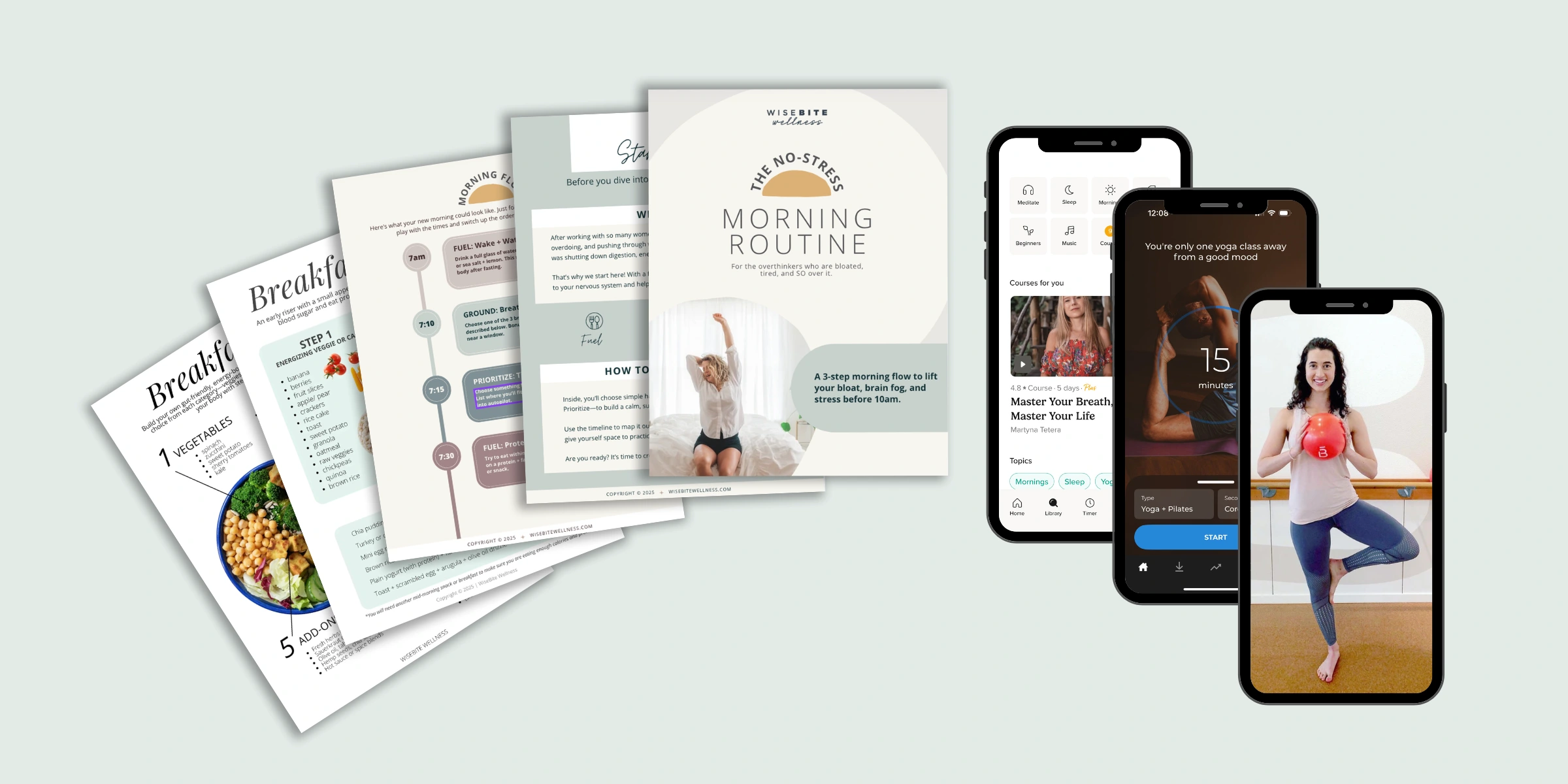
Type-A’s and Monica Gellars of the friend group: I hate to tell you, but your nervous system score is "D-".
(But don't worry. There’s a little study guide below to help you earn an A+ and turn your digestion back on.)
Step 3: Address the hidden mental and emotional patterns underneath it all
This is the deeper layer. It’s about becoming aware of the deeper patterns that may be keeping you stuck in survival mode.
Most of us think of stress as the things we're aware of — feeling overwhelmed, busy, anxious, or stretched too thin. But there's also stress that runs quietly in the background.
It can show up as overthinking, perfectionism, people-pleasing, avoiding difficult conversations, or constantly feeling like you need to do more.
Even when you're not actively thinking about these patterns, your body is still responding to them.
That's one reason I'm such a big advocate for a body-first, somatic approach. The body often gives us clues long before the mind catches up.
It's also important to know that these patterns weren't created because something is wrong with you. Most developed as ways to protect you, help you cope, or navigate difficult experiences.
But sometimes the very things that once protected you can keep your nervous system stuck on high alert.
That’s usually when people start to realize: "This isn't something I can fix with another checklist."

Your first step to reset your nervous system
If you've made it this far, you might be wondering: "Okay, but what am I actually supposed to do?"
One of the very first things I do with clients is help them slow down long enough to notice what their body is trying to tell them. Because over time, many of us get really good at pushing through.
We ignore tension, exhaustion, digestive symptoms, and stress signals until they become so normal that we stop noticing them altogether.
But your body is always communicating with you.
The challenge is that most of us have never been taught how to listen.
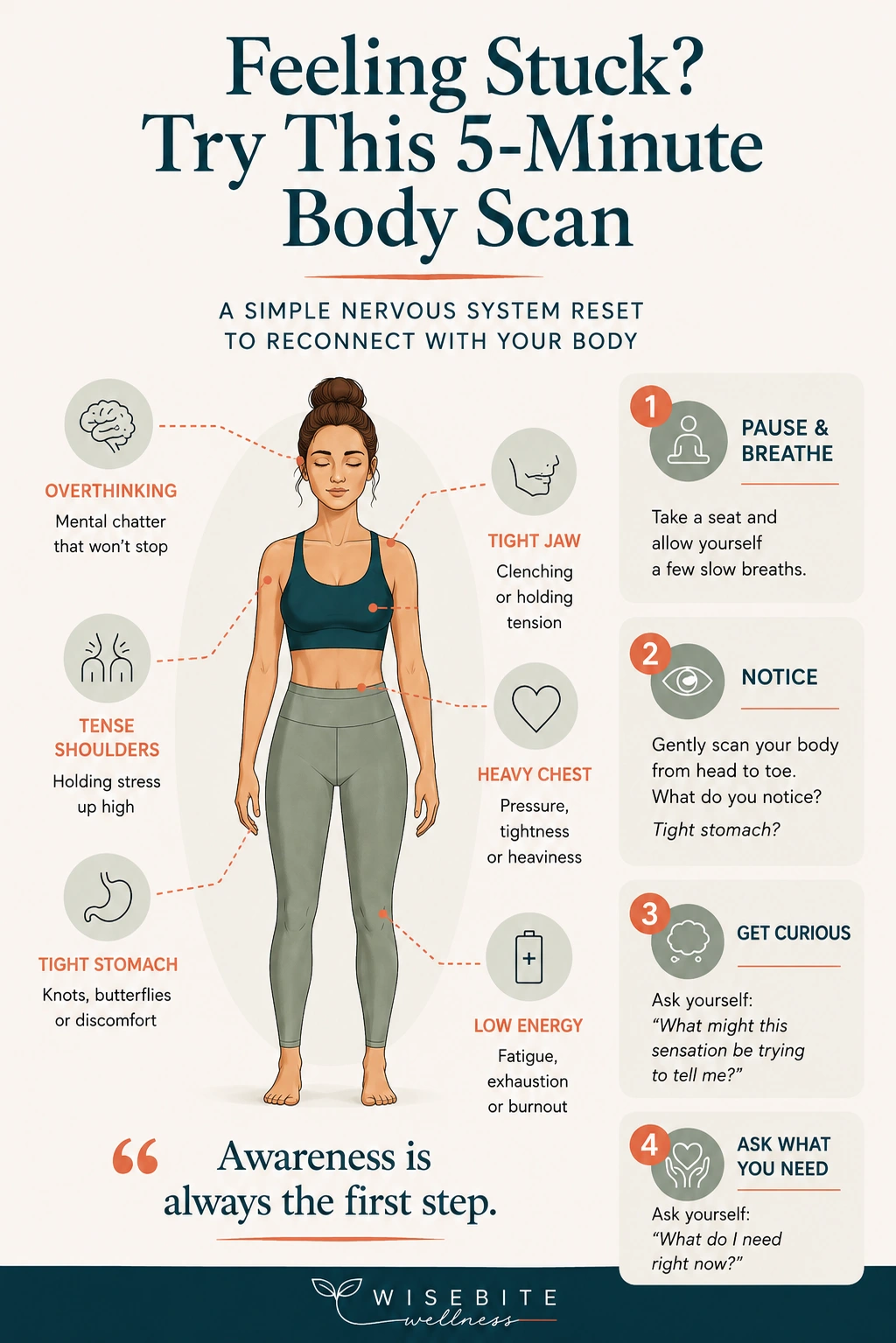
Try this 5-minute body scan to connect with your body
Take a seat and allow yourself a few slow breaths. Then, gently scan your body from head to toe.
What do you notice?
Maybe your shoulders feel tense. Maybe your jaw is clenched.
Maybe there's a heaviness in your chest or tightness in your stomach.
There's no need to fix anything.
Just notice.
Then ask yourself: "What might this sensation be trying to tell me?"
Maybe it's stress about a deadline. Maybe it's frustration from a conversation earlier today. Or maybe your body simply needs a break.
Then ask: "What do I need right now?"
Again, don't worry if the answer isn't immediately clear. The goal isn't to solve everything in five minutes. The goal is to start rebuilding your connection with your body.
Awareness is always the first step.
And the truth is, everyone's stress response looks a little different. Some people feel it as anxiety. Others feel it as tension, exhaustion, digestive symptoms, or the urge to stay busy and avoid slowing down.
These patterns often develop over years, which means it can take time, and sometimes an outside perspective, to recognize them.
We all have blind spots, and it's often easier for someone outside of us to notice the patterns we've normalized.
If you're willing to start paying attention, your body will usually tell you where to begin.
But if you're reading this and realizing there may be more going on beneath the surface, I offer free Symptom Assessment calls to learn more. Together we'll look at where your body is asking for support, what stress signals may be keeping you stuck, and what your next best step could be.
Decoding Your Body’s Signs Will Get You Unstuck
One of the biggest shifts I see in clients isn't weight loss, better digestion, or more energy, although those things often happen too.
It's the moment they stop asking: "Why is my body doing this to me?"
And start asking: "What is my body trying to tell me?"
Because when we're confused by our symptoms, it's hard to know what step to take next. We end up guessing, trying random solutions, or feeling like we're constantly starting over.
But when you begin to understand your body's signals, everything starts to feel a little less overwhelming. You stop fighting your body, start working with it, and that's when things begin to change.
Sometimes the first step is surprisingly simple.
A breath.
A pause.
A moment to get out of your head and back into your body.

Instagram
Pinterest
Facebook
LinkedIn